


Hawaiian Snack Box Portion Sizes: What You Actually Get

Last Updated: November 15, 2026
Quick Summary
Hawaiian snack box portion sizes are best compared by net weight, category spread, and realistic servings rather than piece count, since sellers count pieces, servings, or total weight differently. A small box typically holds 6-10 snacks for 1-2 people, an original 12-18 for 2-4, and a large 20-30 for 4-8.
Piece count is the least useful number for comparing boxes, yet most listings lead with it.
Net weight is the most honest number but the one sellers list least often.
Pick by category spread, not piece count, when choosing a box for sharing.
Size up one tier for a group, since a box built for two rarely stretches to five.
Set out roughly one small bowl per four to six guests per category and refill in stages.
How many servings are in a Hawaiian snack box?
Compare box tiers, serving estimates, and shipping options from Snacks Galore Hawaii.
Table of Contents
Why Hawaiian Snack Box Portion Sizes Are Hard to Compare
Hawaiian snack box portion sizes are rarely stated in a way that lets you compare one box to another, because sellers count different things: pieces, servings, or total weight. This guide from Snacks Galore Hawaii breaks down what actually lands on your counter, so you can size a box to the occasion instead of guessing.
Here is the core problem. One box advertises "15 snacks." Another says "2 pounds." A third lists "12 servings." None of those numbers measure the same thing, so a side-by-side comparison is close to meaningless until you convert them to a common unit.
A buyer's guide from Snacks Galore Hawaii's buyer's guide to allergen options makes this point directly: shoppers should compare the number of individual snacks or servings alongside price per snack, because the headline count alone tells you very little. The same guide notes that allergen options vary by box type, which adds another layer most listings skip.
Watch out: the most common mistake is buying by piece count alone. A box with 20 small individually wrapped candies and a box with 8 larger snack pouches can weigh the same and feed the same number of people.
For quick answers on what a specific box contains, the FAQ page covers product details and ordering specifics.
Piece Count vs. Serving Count vs. Net Weight
Piece count is the number of individual items in the box. Serving count is how many people the contents realistically feed. Net weight is the total mass of food, usually in ounces or pounds.
These three numbers diverge fast. A box of 24 individually wrapped candies has a high piece count and a low serving count, because most people eat several pieces at once. A box with 6 larger snack pouches has a low piece count and a higher serving count per item.
Net weight is the most honest number, but it is also the one sellers list least often. When you can find it, weight is the fairest basis for comparing two boxes.
What's Inside: Hawaiian Snack Box Contents by Category
Hawaiian snack box contents generally fall into five categories, and each one behaves differently when you are estimating portions. Knowing the category mix tells you more about serving size than the total item count does.
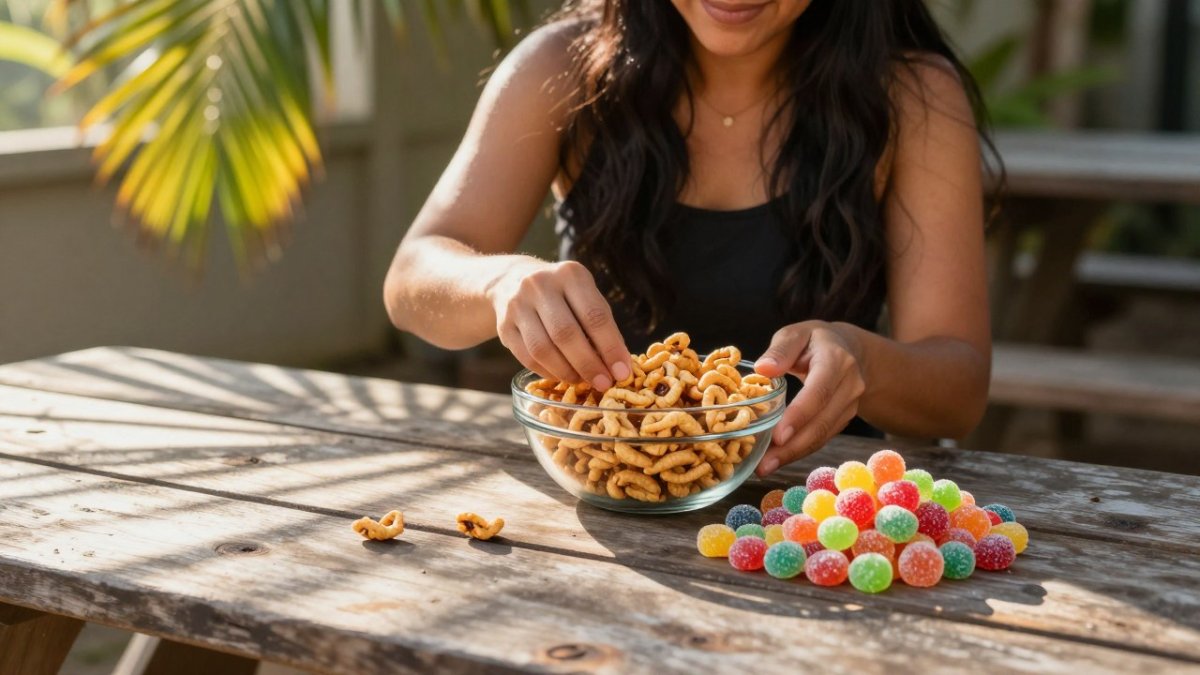
Individually wrapped candies and gummies. High piece count, small servings. Li Hing gummy candies with lemon peel are the classic example, and they are typically eaten a handful at a time.
Savory mixes and party mixes. Chex-style party mixes and seasoned cracker blends. These are the highest-volume category by weight because they are bulky.
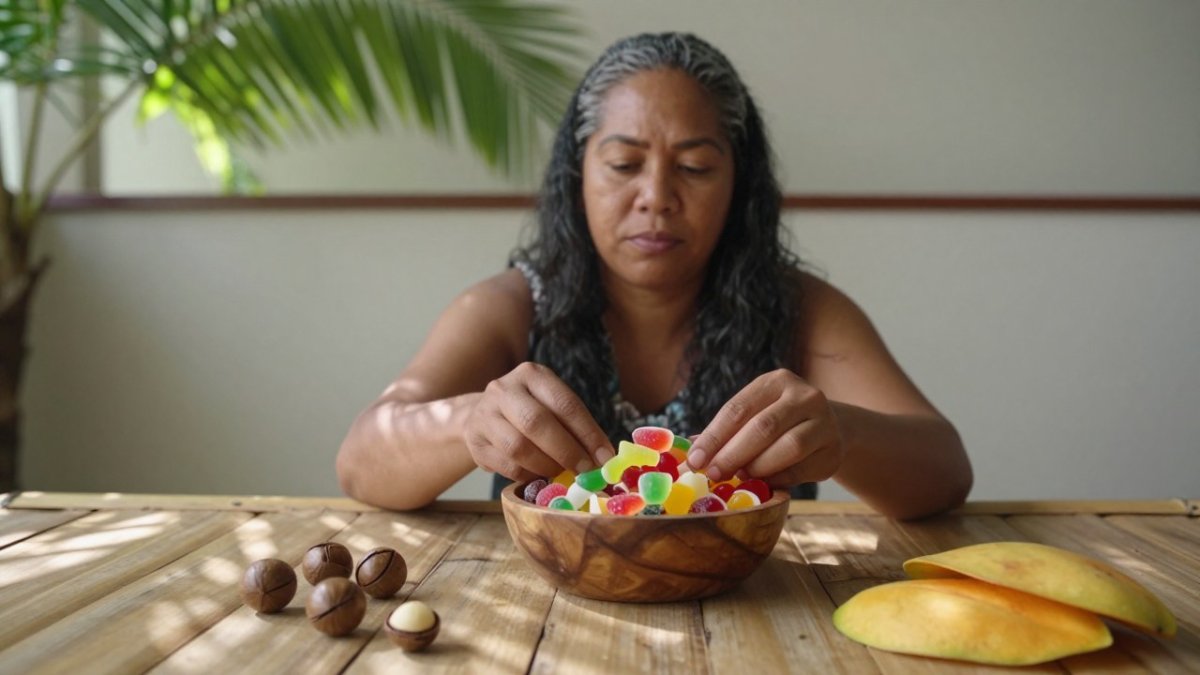
Macadamia nuts and candied nuts. Dense and calorie-heavy. A small bag goes further than it looks.
Chips, crackers, and pretzel sticks. Bulky, light, and easy to over-portion when setting out a spread.
Premium treats. Chocolate, honey, cacao, and coffee items. Usually the smallest count in the box and the ones people ration.
A review from Kona Rose Coffee's Hawaiian snack box review argues a smaller selection of distinctive foods can leave a stronger impression than a crowded box full of filler. That is worth weighing against raw piece count: a box with fewer, better items may serve a gift occasion better than a larger box of filler snacks.
Small, Original, and Large Boxes: A Portion Breakdown
Box tiers usually scale in one of two ways: more items of the same size, or larger items. Most sellers do a mix of both, which is why the jump from small to large is rarely proportional. The fix is to stop reading tier names and start comparing three numbers side by side: item count, category count, and net weight.

Here is the comparison framework that works across sellers, with planning estimates rather than label claims:
Box Tier | Typical Item Count | Categories Covered | Estimated Net Weight | Realistic Servings | Best For |
Small | 6-10 individual snacks | 2-3 | 8-16 oz | 1-2 people | Solo snacking, small thank-yous |
Original | 12-18 individual snacks | 4-5 | 1-2 lb | 2-4 people | Couples, standard gift box |
Large | 20-30 individual snacks | 5+ plus premium treats | 2-4 lb | 4-8 people | Families, sharing, gift-ready packaging |
Treat every cell as a planning estimate, not a manufacturer claim. The ranges are wide because sellers count differently, and that is exactly why you should pull the item list and net weight from the listing before you compare two boxes. A small box with 10 dense macadamia items can outweigh an original box built mostly on crackers and pretzels.
What actually changes between tiers.
Best for: gift-givers who want a box that looks full when opened. Skip if: you need a precise serving count for a catered event, where you should buy by net weight and category count instead.
Cost per Serving and Cost per Ounce: The Value Math
Cost per ounce is the price divided by net weight. Both beat price per box for judging value, and neither is printed on a listing. This is the comparison most buyers guides skip, so here is the math actually run.
Run it in four steps:
Find the net weight in ounces, or estimate it from the item list using the category weights below.
Estimate servings by category: candies and nuts at roughly a small handful per serving, mixes and crackers at a bowl per serving.
Divide the box price by each number.
Add shipping per box before you compare, because a lower headline price with paid shipping can lose on delivered cost.
Category weight and serving assumptions to plug in. These are planning figures, not label claims:
Category | Typical Weight per Item | Servings per Item |
Individually wrapped candies and gummies | 0.5-1 oz | 1 |
Savory and party mixes | 2-4 oz | 1-2 |
Macadamia and candied nuts | 1-2 oz | 1 |
Chips, crackers, pretzels | 1-2 oz | 1-2 |
Premium treats (chocolate, coffee, honey) | 1-3 oz | 1-2 |
A worked example.
For a fuller breakdown of how island snacks stack up against mainland alternatives on price and shipping, see our comparison of Hawaiian snacks versus mainland options.
Choosing a Hawaiian Snack Box for Sharing
A Hawaiian snack box for sharing should prioritize variety and portion flexibility over total item count. The goal is enough different things that everyone finds something, without so much of any one item that it goes stale.
Three rules we would follow:
Pick by category spread, not piece count. Five categories serve a group better than twenty pieces from two.
Favor individually wrapped items. They stay fresh through a long gathering and let people take what they want.
Size up one tier for a group. A box built for two rarely stretches to five without looking thin.
If the recipient has dietary restrictions, check allergen options before anything else. Allergen coverage varies by box type, and it is the one variable that overrides every portion calculation.
Hawaiian Party Snack Portions: How Much to Set Out
Hawaiian party snack portions work out to roughly one small bowl per four to six guests per category, with two or three categories minimum for a small gathering and five or more for a larger one. Set out less than you think you need and refill.
The practical reason: snack mixes and crackers absorb humidity and lose their crunch once exposed. Pouring out the entire box at once is the single most common party mistake.
A workable party plan:
Under 10 guests: one small box, two categories, one bowl each.
10 to 25 guests: one original box plus one large, four categories, refilled in stages.
25 or more: multiple large boxes, all five categories, portioned into bowls in waves.
Keep backup sealed bags in the pantry. A refill midway through the event looks better than a table that was overfilled from the start.
How a Hawaiian Snack Box Subscription Handles Portions
A Hawaiian snack box subscription typically holds portions steady month to month while rotating the specific snacks, so the serving count stays predictable even as the contents change. That consistency is the main argument for subscribing over buying one-off boxes.
At Snacks Galore Hawaii, subscribers can customize their monthly box. If you are still weighing subscription formats, our roundup of island-inspired subscription boxes compares how the plans differ.
Watch out: subscriptions that rotate heavily can shift portion sizes between months without announcing it. If exact servings matter to you, check the item list each cycle rather than assuming the last box's count carries over.
That covers the mechanics. The rest comes down to picking a size and testing it against your own table.
Pick Your Box Size and Start Snacking
Comparing Hawaiian snack box portion sizes comes down to three numbers: net weight, category spread, and realistic servings. Piece count is the least useful of the four, and it is the one most listings lead with.
Our advice: start with a small or original box, open it, and see how far it actually stretches for your household. Most people discover the original tier covers more occasions than they expected.
At Snacks Galore Hawaii, we ship island favorites nationwide with free U.S. shipping on subscription boxes and orders over $75. Our snacks are handcrafted and rooted in local baking traditions, and our fundraising programs give schools and organizations a way to share the aloha. Browse the official store to filter by category and pick your size.
Portion math is only useful if it ends in a box on your counter. Start with a small or original tier, see how your household actually eats through it, and size up from there.
Frequently Asked Questions
How many snacks are usually in a Hawaiian snack box?
Counts depend on the box tier. Small boxes typically hold a handful of individually wrapped items, while large and party boxes can run into the dozens. Because snack box portion sizes are not standardized across sellers, compare the piece count alongside net weight and price per snack. A box with more items is not automatically better value if it is padded with filler snacks. Ask for the serving count and check whether items are full-size or sample-size before ordering.
How many people can one Hawaiian snack box serve?
Portion guidance by recipient or occasion matters more than raw item count.
What is a good Hawaiian snack box size for a gift?
An original or mid-size box is the safest gift choice because it shows variety without overwhelming the recipient. Gift-ready packaging and a balanced mix of sweet and savory items usually matter more to recipients than a higher piece count.
How should I compare snack box portion sizes before ordering?
Line up three numbers: total net weight, number of individual snacks or servings, and price. Divide price by servings to get cost per serving, and by ounces to get cost per ounce. Then check what is inside. This standardized comparison across box sizes is the fastest way to spot real value.
Comments