


How to Host a Cultural Island Food Tasting at Home

Quick Summary
An island food tasting is a small, shared meal where guests sample snacks and dishes from one island culture, such as Hawaii. Plan six to ten items mixing sweet, savory and tangy flavors, and allow about 2 to 3 ounces of candy per guest for events lasting one to two hours.
Plan six to ten items that mix sweet, savory and tangy flavors.
Ask guests about allergies before shopping and plan the menu around them.
For events of 1 to 2 hours, plan 2 to 3 ounces of candy per guest.
For events of 3 hours or more, plan 4 to 5 ounces of candy per guest.
Add about 15 percent to your total as a cushion for extra guests.
Planning a Hawaiian snack tasting?
Snacks Galore Hawaii ships island favorites nationwide, with custom gift boxes and fundraising programs.
Table of Contents
What an Island Food Tasting Is and Who It Works For
Last Updated: November 22, 2026
A cultural island food tasting is a small, shared meal where guests sample snacks and dishes from a particular island culture. A cultural island food tasting is often an easy way to bring the flavors of Hawaii into a living room, a classroom or a fundraiser. The format is simple: a table of treats, a few stories about where each one comes from, and guests trying things they may never have had before.
Food tourism research describes how visitors shape a destination's food scene through their participation. A 2022 study in Tourism Management Perspectives looked at how co-creation activities in commercial food tourism shape a destination's foodscape (Tourism Management Perspectives study on co-creation in food tourism). For a home host, the lesson is that guests who participate, by tasting, asking and comparing, get more out of the event.
This format works for several groups:
Families who want a fun, low-stress way to share a heritage or a favorite place
Teachers and parent groups planning a culture day or classroom snack event
Coworkers and friends hosting a theme night
Fundraisers for youth sports teams or community groups
It also suits people who have no personal ties to the islands. You do not need to be from Hawaii to host a good tasting. You only need to be curious and respectful about where the foods come from.
Planning Your Hawaiian-Themed Party Food Menu
Start with a short list of six to ten items. A balanced menu mixes sweet, savory and tangy flavors, so no single bite overwhelms the table.
Good categories to include:
Sweet: gummies, chews and tropical candy
Savory: seasoned snack mixes, pretzels and crackers
Tangy: sour or citrus-flavored gummies, such as lemon or li hing flavors
Drinks: pineapple juice, lemon-lime soda or Hawaiian punch
Keep the menu simple for your first event. Ask guests about any allergies before you shop, then plan around those needs. Browse Hawaiian snacks on our website as you build your list.
Quick tip: Write the menu on a small card and tape it to the table. Guests like knowing what they are about to try.
Deciding Candy Buffet Portions per Guest
Most hosts underbuy candy and then wish they had more. Planning portions up front prevents both running out and wasting extra product.
A practical starting point is to plan a small handful per guest for each candy type, then adjust for the length of the event:
Short event (1 to 2 hours): about 2 to 3 ounces of candy per guest
Longer event (3 hours or more): about 4 to 5 ounces per guest
Kids' parties: plan for more, since children tend to graze
Multiply the number of guests by the portion size, then add about 15 percent as a cushion. Pricing for candy depends on quantity, dates and delivery, so check our site for current prices and a quote before you order. Review Li Hing Mui Lychee candy options to compare sizes before you commit.
The article gives a starting portion size for each event length, so hosts can plan quantities before they shop.
Event length | Candy per guest | Planning note |
1 to 2 hours | 2 to 3 ounces | Starting portion |
3 hours or more | 4 to 5 ounces | Longer events need more |
Kids' parties | More than adults | Children tend to graze |
All events | Add about 15 percent | Cushion for extra guests |
Setting Up the Candy Buffet Step by Step
A well-organized table is easier to shop, easier to refill and more fun to look at. Follow this timeline to set it up without rushing.

Two days before: Confirm your guest count and final menu.
The day before: Wash and dry all containers. Check that your tablecloth fits the table.
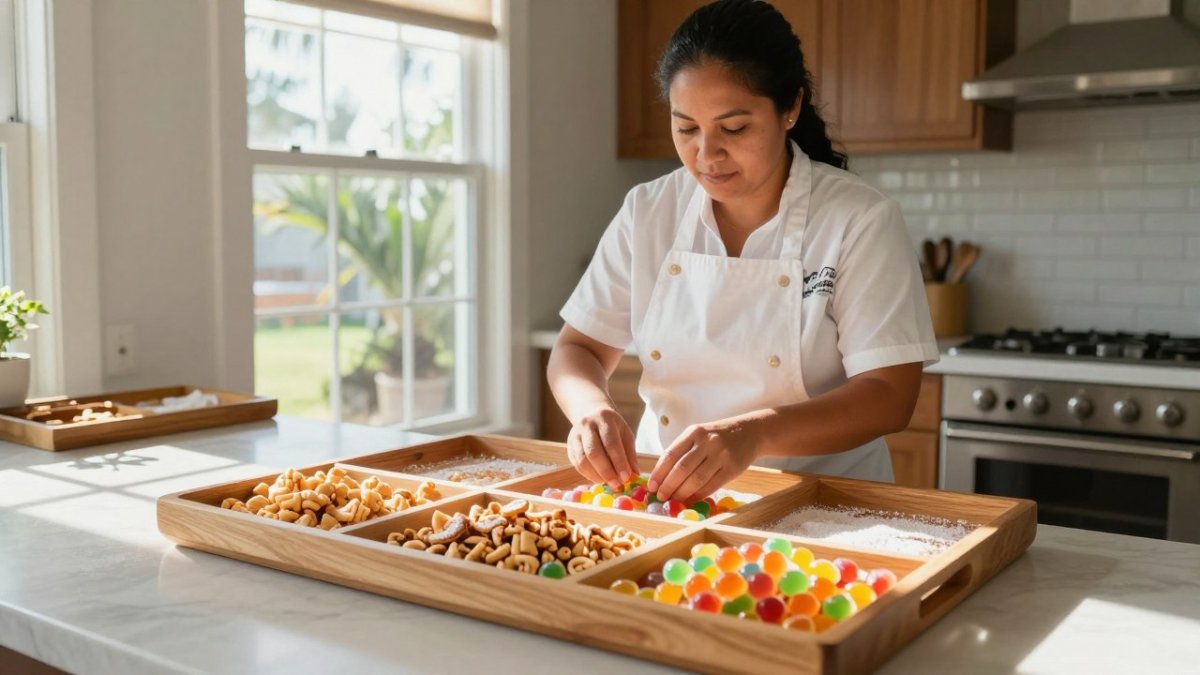
Morning of the event: Sort candy into bowls by flavor or color.
One hour before: Set out the bowls, trays and labels.
Thirty minutes before: Fill the bowls and place drinks on a separate table.
During the event: Check and refill bowls every 30 to 45 minutes. Shop the full range of Hawaiian candies and snacks to restock the table as you go.
Choosing Containers, Trays and Risers
Mixing container heights makes the table look fuller and more inviting. Use a few tools to create this effect:
Cake stands and risers to lift bowls to different heights
Trays to group related candy together
Glass jars to show off bright colors
Small bowls for single flavors that guests can scoop themselves
Place the tallest item toward the back of the table, and keep the walkway clear so guests can reach each bowl. Watch out: avoid placing bowls near heat sources or direct sun, since warm conditions can soften gummies and chews.
Labeling Foods for Guests with Allergies
Labels help guests make safe choices. Write the name of each item, its main flavor and any common allergens on a card placed next to the bowl. Check each product's ingredient list before you set it out, since recipes can change. For questions about specific items, contact us directly for product details and ingredients.
Tropical Party Favor Ideas and a Simple Budget
Favors and budget are where most hosts either overspend or run short. Treat them as one planning exercise: decide the favor first, then back into a per-guest budget that covers candy, containers, drinks and paper goods.
A per-guest budget you can actually use
Start with a total you are comfortable spending, then divide by guest count to get a per-guest ceiling.
Candy: the largest line item. Buy the top two or three crowd-pleasers in bulk and keep the long tail of flavors in smaller amounts.
Containers and decor: reuse cake stands, jars and trays you already own.
Favors: keep them small and uniform. A favor bag that costs about as much as one serving of candy per guest is a reasonable target.
Drinks and paper goods: buy in bulk and choose a single signature drink instead of a full bar of options.
Bulk-buying and substitution guidance
Buying in bulk lowers the per-ounce cost but raises the risk of leftovers. A workable rule is to buy bulk only for the two or three items you are most confident guests will eat, and buy the rest in standard retail sizes. If a specific candy is out of stock or priced higher than expected, substitute within the same flavor family: a different tropical gummy for a tropical gummy, a different citrus sour for a citrus sour. Guests notice flavor, not brand.
Favor ideas that double as waste reduction
Candy favor bags: a small bag of tropical candy tied with a ribbon, sized to one serving per guest.
Reusable containers: small jars or tins guests can keep and refill.
Recipe cards: a printed card with the story of one snack and where to buy it.
Leftover repurposing: send leftover candy home in the favor bags rather than storing it, which cuts waste and gives guests a second taste.
For fundraisers, Contact us for current terms and pricing.
Your Tasting Day Timeline and Next Step
On the day of the event, arrive early to finish the table before guests come in. Greet people at the door, explain the menu briefly, and invite them to try each bowl. Take a few minutes to share the story behind one or two favorite snacks, since that is what guests tend to remember.
After the event, note what ran out first and what was left over. Those notes will make your next tasting easier to plan.
Ready to put this into practice? Browse the full range of Hawaiian snacks at Snacks Galore Hawaii and start building your own island food tasting today.
Frequently Asked Questions
How much candy do I need for a candy buffet?
Plan roughly 2 to 4 ounces of candy per guest for a buffet that is one of several food options, and closer to 6 ounces if candy is the main dessert. Guests usually take a small handful at first and return for more, so it helps to add a little extra for popular items. Estimate by multiplying your guest count by your chosen portion, then add about 10 percent for refills. Adjust upward for longer parties and downward if you are serving cake or other desserts at the same time.
What food should you serve at a Hawaiian-themed party?
Good choices include grilled teriyaki skewers, pulled pork sliders, poke-style salads, fried rice, fresh fruit with pineapple and mango, and Hawaiian sweet bread rolls. Pair savory dishes with island snacks like sweet Chex mix and tangy gummies to add variety. Keep dishes simple and make most of them ahead so you can spend the party with your guests. Label every dish clearly, especially any that contain nuts, shellfish or coconut.
How do you label foods for guests with allergies?
Use printed or handwritten labels placed at the front of each dish, listing the main ingredients and the most common allergens such as peanuts, tree nuts, dairy, eggs, wheat, soy, fish and shellfish. Keep allergen-free items on a separate table or at one end of the buffet to avoid cross-contact. Ask guests about allergies when they RSVP so you can plan ahead. Serve food with its own serving utensil and replace utensils if a dish is moved.
Comments