


How to Pair Artisanal Snacks with Cheese Like a Pro

Last Updated: November 5, 2026
Quick Summary
Pairing artisanal snacks with cheese works by matching intensity and balancing texture: keep the snack within one point of the cheese on a 1-5 intensity scale, then add crunch to creamy cheese or a soft, chewy partner to hard cheese. Finish each bite with one acid or sweet note, never both.
Rate cheese intensity from 1 to 5, with aged cheddar, blue, and Parmesan at 4-5.
Creamy cheeses like Brie need crunch from nuts, crostini, or small-batch potato chips.
Plan 2-3 ounces of cheese per person when the board is the main event.
Pull soft cheeses from the refrigerator 45 minutes before serving and hard cheeses about 30 minutes.
Arrange cheeses mild to bold and place each matching snack next to its cheese.
Table of Contents
Why Artisanal Snacks Belong on Every Cheese Board
The global cheese snacks market hit $81.7 billion in 2025 and is projected to reach $86.8 billion in 2026, according to Grand View Research's cheese snacks market report. That number tells you something simple: people want cheese, and they want something to eat with it. Pairing artisanal snacks with cheese is how you turn a plate of cheddar into a board people remember.

At Snacks Galore Hawaii, we build boards around bold, island-inspired flavors. A great cracker or a tangy gummy can make a plain wedge taste new.
Here is the case for going beyond supermarket crackers:
Artisanal snacks add texture you cannot get from a box
Small-batch flavors give each bite a story
A mix of sweet, salty, and tangy keeps guests grazing longer
Better snacks make a simple board feel like an event
The trend backs this up. Tastewise's Cheese Trends 2026 reports premium cues around cheese are up 12% year over year and artisan cues up 7%. Shoppers are paying attention to craft. Your board should too.
A Simple Cheese Pairing Chart to Start With
A simple cheese pairing chart matches each cheese style to a snack that balances it. For a concrete place to start, explore Honey Mustard Pretzel Sticks.
Cheese | Snack Partner | Why It Works |
Sharp cheddar | Honey mustard pretzel sticks | Salty crunch meets tangy sweetness |
Blue cheese | Dried apricots | Sweet fruit softens the funk |
Brie | Honey and berries | Creamy cheese needs fresh contrast |
Parmesan | Savory roasted peanuts | Both bring a salty, nutty depth |
Swiss | Sweet Chex mix | Mild cheese balances a sweet, crunchy bite |
This chart covers the basics of pairing artisanal snacks with cheese. Start here before you get creative.
The rule behind every row is contrast. If the cheese is rich, pick a snack that is bright or crunchy.
A Repeatable Pairing Method for Any Cheese and Snack
Most charts stop at named combinations. A more useful approach is a short decision process you can run with whatever is already in your pantry. Work through these four questions in order.
Rate the cheese's intensity on a 1-5 scale. Mild cheeses such as fresh mozzarella, ricotta, and young Swiss sit at 1-2. Medium cheeses such as cheddar, Gouda, and Monterey Jack sit at 3. Bold cheeses such as aged cheddar, blue, Parmesan, and aged Gouda sit at 4-5. Intensity rises with age, salt, and rind development.
Match or contrast the intensity. Pair a 1-2 cheese with a delicate snack (water crackers, plain almonds, fresh apple). Pair a 4-5 cheese with a bold snack (honey mustard pretzels, dark chocolate, seasoned nuts). A common pattern is to keep the snack within one point of the cheese so neither disappears.
Choose the texture you are missing. Creamy cheeses (Brie, Camembert, triple-cream) need crunch: nuts, crostini, small-batch potato chips. Hard, crumbly cheeses (Parmesan, aged cheddar, blue) need a soft or chewy partner: dried fruit, preserves, honey, soft bread.
Add one acid or sweet note. Acid (pickles, mustard, vinegar-based preserves) cuts richness. Sweet (honey, fruit, chocolate) rounds out salt and funk. Pick one, not both, per bite.
How Cheese Characteristics Change the Snack Choice
Beyond intensity, four cheese traits steer the pairing:
Milk type. Goat and sheep cheeses tend to be tangier and more acidic, so they take well to fruity and floral snacks (fig spread, fresh berries, honey). Cow's milk cheeses are richer and pair with earthy or salty snacks (nuts, pretzels, cured meat).
Age. Younger cheeses hold more moisture and milder flavor, so they need texture and a flavor lift from the snack. Older cheeses have concentrated salt and umami, so a sweet or acidic snack keeps the bite from feeling heavy.
Rind. A bloomy rind (Brie, Camembert) adds a mushroomy note that works with earthy snacks such as walnuts or mushroom-seasoned crackers. A washed rind is pungent and benefits from a bright, acidic partner.
Salt and acidity. A salty cheese such as feta or Parmesan needs a sweet or fatty snack to balance it. A high-acid cheese such as fresh chèvre needs a richer, buttery snack.
Watch out: pairing two high-intensity items (a 5-level blue with a heavily seasoned chip) flattens the board because the palate cannot separate the flavors. Keep at least one element mild in every pairing.
Adapting the Chart to Artisanal Snack Categories
The chart above uses familiar snacks, but the same method works across craft categories:
Small-batch potato chips (sea salt, rosemary, or truffle) suit creamy cheeses that need crunch.
Savory biscuits and shortbread suit blue and aged cheeses; the butterfat softens salt and funk.
Preserves and compotes (fig, quince, onion jam) suit hard and pungent cheeses.
Specialty popcorn (cheese-dusted, herbed, or kettle) suits mild to medium cheeses as a lighter crunch.
Chocolate and confections suit bold blues and aged cheddars in small amounts.
Use the four-question method on any new snack: rate its intensity, note its texture, decide whether it brings acid or sweet, and check that it sits within one intensity point of the cheese.
Nut and Cheese Pairings That Always Work
Nut and cheese pairings work because both share a rich, earthy base. Almonds, pecans, walnuts, and pistachios all play well with cheese.
Almonds suit soft cheese like Brie
Pecans bring sweetness to sharp cheddar
Walnuts pair best with blue cheese
Pistachios lift mild cheeses like Swiss
Our savory Swiss peanuts are a house favorite for a reason. Dry roasted peanuts with garlic powder and savory Swiss seasoning give a hard cheese a crunchy, flavorful partner. A common mistake is using plain salted nuts. Seasoned nuts do more work on the board.
The Cheese and Fruit Pairing Chart for Sweet Contrast
A cheese and fruit pairing chart shows how sweet fruit balances salty or rich cheese. Fresh fruit and dried fruit each have a place.
Fruit | Best With | Effect |
Fresh berries | Brie, soft cheese | Light, juicy contrast |
Dried apricots | Blue cheese, aged cheddar | Chewy sweetness cuts salt |
Sliced apple | Sharp cheddar | Crisp texture, mild sweet |
Honey | Any hard cheese | Rounds out sharp edges |
Sweet and savory is not a fad. Mintel's cheese industry outlook notes brands pairing cheese with fruit compotes, chocolate, and honey. That same logic works on your board.
Dried fruit is the easiest win. It keeps for weeks and adds a chewy texture that fresh fruit cannot match.
Unusual Cheese Pairings Worth Trying
Unusual cheese pairings are where a board gets interesting. Skip the expected and test a few bold combos.
Blue cheese with dark chocolate
Cheddar with a tangy island gummy
Brie with a drizzle of chili honey
Parmesan with a sweet-and-salty Chex mix
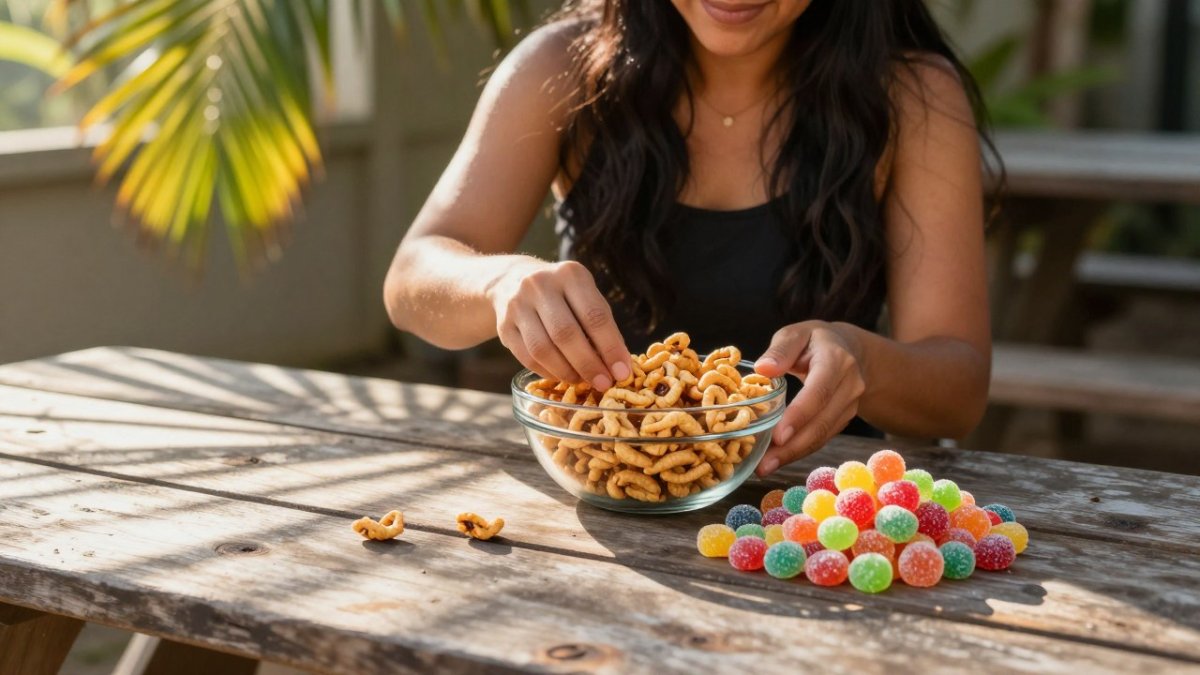
Our furikake sweet Chex mix is a good place to start. The sweet and savory crunch stands up to a soft cheese without overpowering it. Pairing artisanal snacks with cheese is about surprise.
Watch out: bold snacks can bury a delicate cheese. Keep strong flavors next to strong cheese, and mild next to mild.
How to Balance Flavor, Texture, and Portions on the Board
Balance comes down to three things: flavor contrast, texture, and portion size. Get these right and any board works.
Aim for one soft, one hard, and one blue cheese
Add two crunchy snacks and one chewy item
Include one sweet element and one salty
Keep portions small so guests try more
Texture matters as much as taste. Creamy cheese needs a crunchy cracker or nut. Hard cheese can take a soft fruit or a chewy gummy.
Concrete Portions per Guest
A common pattern for a grazing board is 2-3 ounces of cheese per person when the board is the main event, and 1-1.5 ounces per person when it is an appetizer before a meal. For snacks, plan about 1 ounce of nuts, 1 ounce of crackers or chips, and 1-2 tablespoons of preserves or honey per guest. A board for eight people typically needs 1.5-2 pounds of cheese total across three styles, plus 8-10 ounces of crunchy snacks and 6-8 ounces of a chewy or sweet item.
Serving Temperature and Timing
Pull cheese from the refrigerator 30-45 minutes before serving. Soft cheeses such as Brie and Camembert need the full 45 minutes to soften and release aroma; hard cheeses need about 30 minutes.
Build the board in this order so textures hold: cheeses first, then firm items (nuts, pretzels, crackers), then soft or wet items (preserves, honey, fresh fruit) in small bowls, and finally delicate items such as chips or popcorn right before guests arrive.
Serving Order Within a Single Board
When a board holds several cheeses, arrange them from mild to bold so guests can taste in sequence without overwhelming their palate.
Watch out: putting a strong blue cheese next to a delicate Brie on the same board causes the blue to dominate the aroma and flatten the Brie's flavor.
Serving temperature counts too. Penn State Extension's 2026 food trends report cites a 17% year-over-year rise in snacking occasions, so grazing boards are here to stay.
Building Your Board with Island-Inspired Snacks
Island-inspired snacks bring something a plain cracker cannot: flavor with a sense of place. That is the heart of what we do at Snacks Galore Hawaii.
You can browse our official store to find Hawaiian snacks. Build a board around tangy gummies, sweet Chex mix, and your favorite pretzel sticks.
Here is how we would build a board:
Start with two cheeses, one soft and one hard
Add a tangy gummy for sweet contrast
Add a savory nut or pretzel for crunch
Finish with a sweet Chex mix
Serve at room temperature
Pairing artisanal snacks with cheese does not need to be complicated. For more ideas on serving a crowd, see our guide to artisanal Hawaiian snacks for corporate events.
Frequently Asked Questions
What are some good snacks to pair with cheese?
Crackers and savory biscuits are the classic base, but artisanal snacks go further. Almonds and pecans suit hard cheeses, honey and dried apricots lift blue cheese, and tangy gummies or sweet Chex mix add a playful contrast to creamy Brie. Aim for one crunchy, one salty, one sweet, and one tangy item per board so every bite has a counterpoint. Portions matter too: keep each accompaniment to about a tablespoon or a small handful per person so the cheese stays the focus.
What is the 3-3-3 rule for a cheese board?
The 3-3-3 rule means three cheeses, three accompaniments, and three types of crackers or bread. It keeps a board balanced without overcrowding. Choose one soft cheese, one hard cheese, and one blue or washed-rind cheese, then pick three snacks that contrast in texture and flavor, such as nuts, dried fruit, and a savory biscuit. For a larger gathering, scale up in threes: six cheeses, six snacks, six crackers. The rule works because it forces variety without decision fatigue.
Which crunchy snacks pair well with soft cheese?
Soft cheeses like Brie and Camembert need crunch to offset their creaminess. Water crackers, toasted baguette slices, and savory biscuits are reliable choices. For something less expected, try potato chips, pecans, or a handful of sweet Chex mix, which adds a light crisp texture and a hint of sweetness. Avoid heavy, thick crackers that overpower the delicate rind. Serve soft cheese at room temperature so the texture spreads easily and the crunch stands out.
How do you balance sweet and savory flavors on a cheese board?
Start with the cheese's intensity, then add a snack that pushes back in the opposite direction. A salty blue cheese wants honey, dried apricots, or chocolate; a mild cheddar wants mustard, pickles, or olives. Keep roughly half the accompaniments sweet and half savory, and taste as you build. The goal is contrast, not competition: if one bite tastes only of honey, add a salty nut or a tangy pickle to pull it back into balance.
Ready to build a board that stands out? Snacks Galore Hawaii offers handcrafted island snacks, custom gift boxes, and monthly subscriptions with free U.S. shipping on qualifying orders. Get started with Snacks Galore Hawaii and bring a taste of the islands to your next gathering.
Comments